
Income Tax Slabs & Structural Changes for FY 2026-27
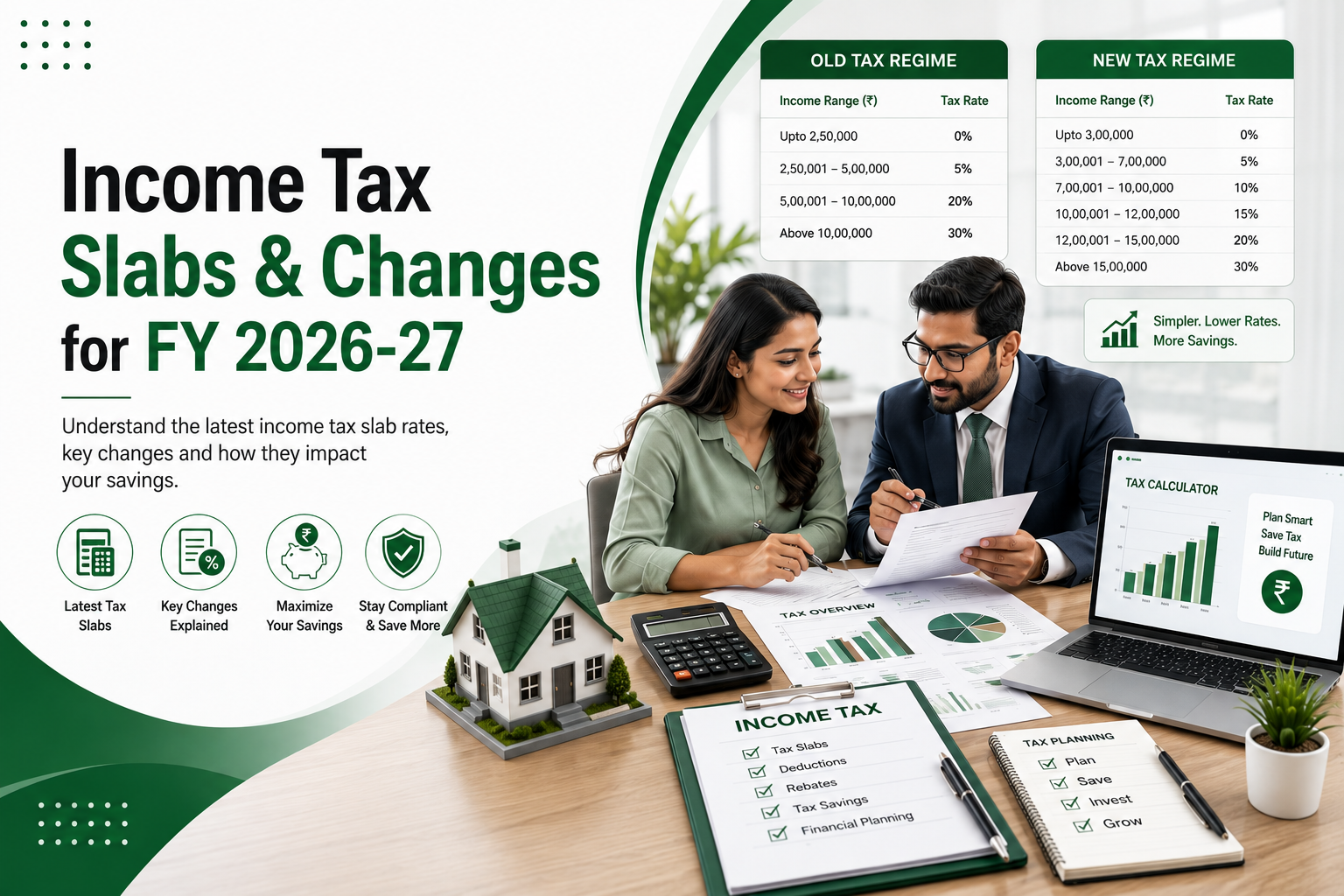
Tax planning is an essential cornerstone of personal financial management in India. With continuous regulatory revisions, evolving economic policies, and structural budget adjustments announced by the government, staying thoroughly informed about income tax slabs across both the Old and New Tax Regimes is critical. Proper evaluation and strategic foresight allow salaried professionals, independent freelancers, corporate consultants, and business owners to optimize their net take-home earnings legally and efficiently.
1. The Evolving Landscape of Indian Taxation
Over recent fiscal cycles, India's taxation framework has undergone a massive structural shift. The introduction and subsequent refinement of the New Tax Regime marked a deliberate move toward a simplified, low-exemption, low-rate tax architecture. The ultimate objective of these policy changes is to reduce administrative friction, minimize compliance headaches for individual taxpayers, and put more disposable capital directly into the hands of the working populace to stimulate domestic consumption and economic growth.
However, transitionary frameworks mean that taxpayers cannot simply rely on generic rules. Deciding whether to stick with legacy deductions or adopt the streamlined new slabs requires detailed calculation based on your salary structure, rent payouts, housing loans, and investment commitments.
2. Deep Dive: New Tax Regime Slabs (FY 2026-27)
The New Tax Regime serves as the default taxation framework for individual taxpayers in India. It offers significantly widened income tax slabs, lower nominal rates, and an enhanced standard deduction for salaried individuals and pensioners. Under this regime, you are not required to lock funds into traditional tax-saving instruments like Public Provident Fund (PPF) or ELSS mutual funds just to reduce your tax liability.
| Taxable Income Bracket | Income Tax Rate |
|---|---|
| Up to ₹3,00,000 | Nil (0%) |
| ₹3,00,001 to ₹7,00,000 | 5% |
| ₹7,00,001 to ₹10,00,000 | 10% |
| ₹10,00,001 to ₹12,00,000 | 15% |
| ₹12,00,001 to ₹15,00,000 | 20% |
| Above ₹15,00,000 | 30% |
3. The Legacy Old Tax Regime: Deductions and Exemptions
Despite the popularity of the simplified new system, the Old Tax Regime continues to hold substantial value for high-earning individuals who maintain heavy financial commitments toward long-term savings, housing, and social security. The old system allows you to claim multiple deductions that significantly reduce your gross taxable income.
Key Deductions Available Under the Old Regime:
- Section 80C: Allows deductions up to ₹1,50,000 per financial year across instruments like EPF, PPF, Life Insurance premiums, Equity-Linked Savings Schemes (ELSS), National Pension System (NPS), and principal repayment on home loans.
- Section 80D: Permits deductions toward health insurance (mediclaim) premiums for self, spouse, children, and dependent parents, providing crucial medical safety net incentives.
- House Rent Allowance (HRA): Salaried individuals paying rent can claim substantial exemptions based on their basic salary, actual rent paid, and residential city parameters.
- Home Loan Interest (Section 24): Homeowners servicing a housing loan can claim up to ₹2,00,000 per year on interest paid for self-occupied residential property.
4. Comparative Analysis: Old vs. New Regime
Choosing between the two regimes requires running personalized simulations. If your cumulative deductions under 80C, 80D, HRA, and home loan interest exceed approximately ₹2.5 lakh to ₹3.5 lakh annually, the Old Tax Regime may still result in lower overall tax outflows. Conversely, if your lifestyle favors liquidity without long-term tax-locking commitments, the New Regime provides straightforward efficiency.
Because every individual's financial portfolio is unique, generic assumptions can lead to higher tax outflows. To find the exact option suited for your earnings, check our comprehensive Income Tax Calculator to compare your liability side-by-side.
5. Surcharge, Cess, and Marginal Relief
Beyond basic slab rates, taxpayers must account for surcharges when income crosses higher thresholds (such as ₹50 lakh, ₹1 crore, and above). Additionally, a standard 4% Health and Education Cess is levied on the total tax plus surcharge amount. Understanding marginal relief provisions ensures that high earners are not penalized excessively when their income crosses a surcharge slab boundary by a narrow margin.
6. Strategic Conclusion for FY 2026-27
Effective tax planning is a year-round discipline, not a hurried last-minute scramble in March. Evaluate your anticipated earnings, map out your deductions early, align your investments with your long-term life goals, and utilize reliable calculation utilities to ensure absolute compliance and optimal annual savings.