
SIP vs Lumpsum Investment: Which Strategy is Best for Wealth Creation?
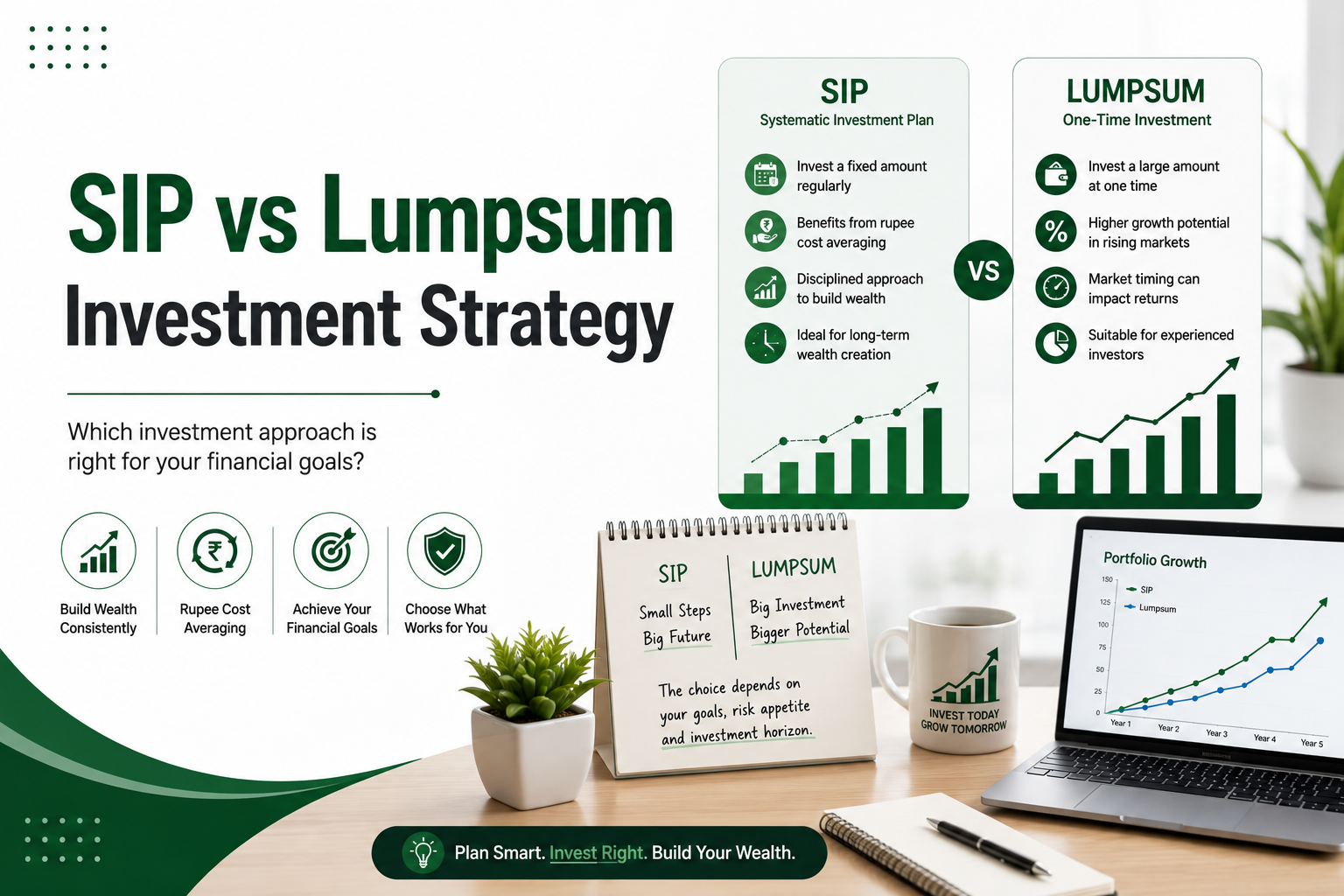
When stepping into the expansive world of personal finance, mutual funds, and equity markets, one of the most classic and crucial dilemmas every investor faces is choosing between a Systematic Investment Plan (SIP) and a Lumpsum investment approach. Both methodologies feature entirely unique operational structures, distinct psychological impacts, varying risk-exposure parameters, and vastly different performance outcomes depending on prevailing macroeconomic and market cycles. To build an enduring, high-performing asset portfolio, an investor must look beyond generalized advice and examine the mathematical mechanics of compounding, risk management, and the specific market conditions where each strategy shines.
1. Foundations of Modern Equity Investing
Before evaluating the performance metrics of SIPs versus lumpsum deployments, it is vital to understand the foundational philosophy of wealth creation. Equity markets are inherently volatile over short horizons, reacting dynamically to global economic shifts, corporate earnings reports, geopolitical tensions, and domestic monetary policies. However, over extended multi-year or multi-decade horizons, productive businesses and corporate economies trend upward, reflecting human productivity and economic growth.
The primary challenge for retail investors is surviving and thriving through short-term market turbulence without succumbing to emotional panic. This brings us to the comparative analysis of how capital enters the market.
2. What is a Systematic Investment Plan (SIP)?
A Systematic Investment Plan (SIP) is an investment vehicle offered by mutual funds that allows individuals to contribute a fixed amount of money at regular intervals—weekly, monthly, or quarterly—into a chosen scheme. Rather than deploying all available cash at once, the investor builds their market exposure progressively.
The Magic of Rupee-Cost Averaging
The primary weapon of a SIP investor is rupee-cost averaging. Because your installment amount remains constant regardless of market movements, your capital automatically purchases more units when prices drop during market corrections and fewer units when prices surge during bull markets. This automatic adjustment eliminates the psychological burden of trying to "time" the market bottom, ensuring your average cost per unit remains optimized over long durations.
3. What is a Lumpsum Investment?
A lumpsum investment involves deploying a substantial, one-time block of capital into a financial instrument all at once. This strategy is frequently utilized when individuals experience significant capital inflows—such as a corporate performance bonus, property sale proceeds, an inheritance, or a business exit.
When you invest via a lumpsum, 100% of your capital enters the market immediately on Day One. In a strongly expanding secular bull market, lumpsum deployment typically generates superior absolute returns because your entire corpus participates fully in every upward wave from the very beginning.
4. Comprehensive Comparison: SIP vs. Lumpsum
To determine which modality matches your financial capacity and psychological temperament, review the comparative parameters below:
| Comparison Metric | Systematic Investment Plan (SIP) | Lumpsum Investment |
|---|---|---|
| Initial Capital Needed | Extremely low (Accessible starting from ₹500/month) | High (Requires a substantial upfront cash pool) |
| Market Timing Vulnerability | Negligible due to systematic staggered entry | High risk if deployed right before a major correction |
| Behavioral Stress Level | Low; automated debits remove emotional decision-making | High; market drops immediately trigger anxiety over capital loss |
| Compounding Velocity | Gradual acceleration as cumulative capital expands | Immediate, full-scale compounding across the entire corpus |
| Target Investor Profile | Salaried professionals and steady monthly earners | Business owners, investors with sudden cash windfalls |
5. Analyzing Market Cycles: When Does Each Win?
Financial researchers frequently analyze historical index data to determine whether SIP or Lumpsum wins over rolling 10-year periods. The empirical data reveals fascinating insights:
- In Bear or Sideways Markets: SIPs significantly outperform lumpsum investments. Because markets remain stagnant or correct downward for extended stretches, rupee-cost averaging accumulates massive unit volumes at deep discounts. When the market eventually rebounds, the portfolio surges exponentially.
- In Secular Bull Markets: Lumpsum investments frequently outperform SIPs. If a market trends persistently upward with minimal corrections, money deployed upfront captures maximum growth, whereas staggered SIP installments buy units at progressively higher price points.
6. The Hybrid Alternative: Systematic Transfer Plans (STP)
For investors who find themselves holding a large lumpsum amount but feeling paralyzed by fear of market peaks, the financial industry offers an exceptional middle ground: the Systematic Transfer Plan (STP).
Under an STP, you deposit your entire lumpsum capital safely into a low-risk liquid mutual fund or ultra-short-duration debt fund. From that secure pool, you instruct your fund house to transfer a fixed amount on a weekly or monthly basis into an aggressive equity fund of your choice. This protects your principal from sudden market crashes while ensuring your money transitions systematically into equities without emotional hesitation.
7. Planning Your Wealth Trajectory with Tools
Projections and calculations form the bedrock of intelligent financial planning. Whether you are modeling monthly savings goals or evaluating compounding growth horizons, utilizing specialized utilities like our SIP Calculator empowers you to visualize realistic asset accumulation targets and stay disciplined.
Conclusion
Ultimately, the debate between SIP and Lumpsum is not about finding a universal "better" option, but rather aligning the strategy with your unique cash flow realities. If you earn a predictable monthly salary, a disciplined SIP habit combined with annual step-up increments is your golden ticket to long-term financial independence. If you acquire a major monetary windfall, evaluating market valuations or leveraging an STP ensures your capital works for you safely and efficiently.